
Mistakes to avoid when installing stretch fabric
Transparency
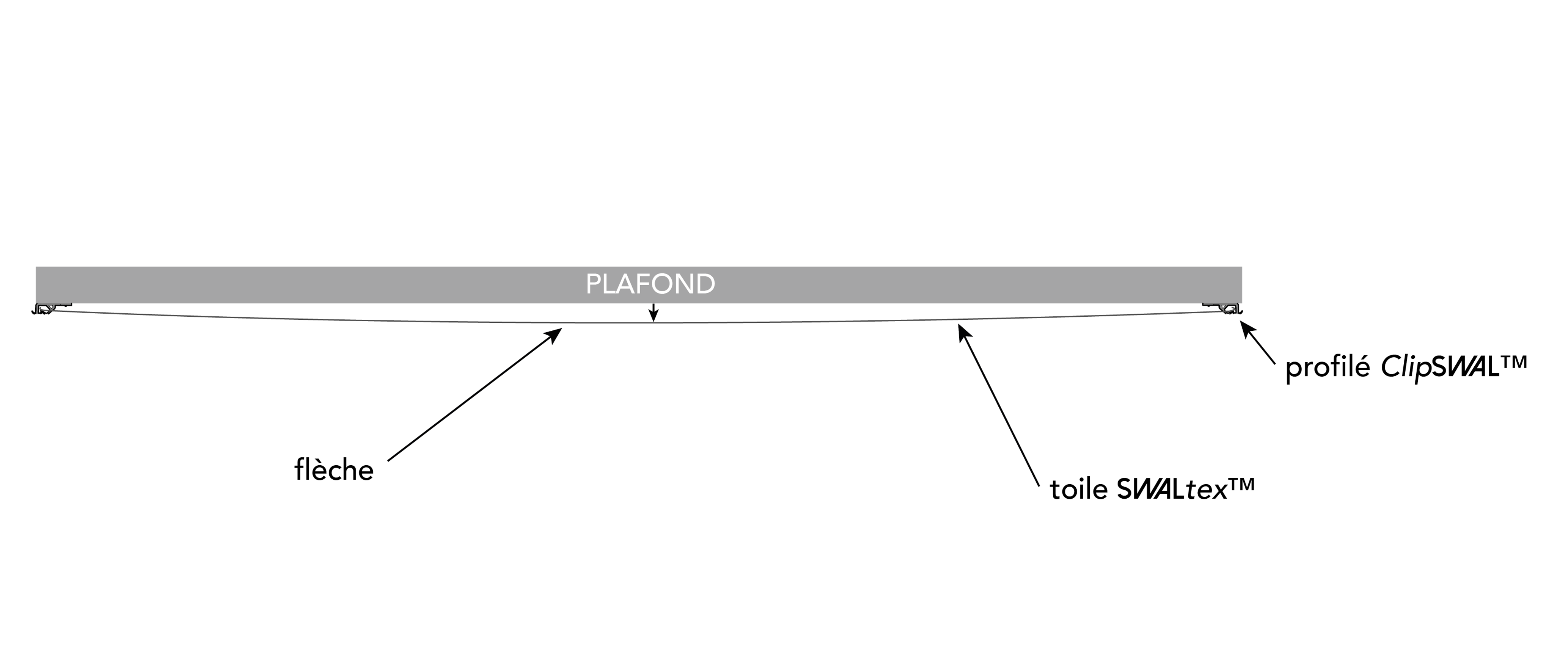
If the existing ceiling shows strong colour differences or very marked irregularities (very light or very dark areas), these can show through slightly, particularly behind a white fabric fitted close to the support (around 10 to 30 mm).
Nothing to worry about: simply adjust the plenum height (the space between the existing ceiling and the fabric) to get an even result. A slightly more generous plenum generally hides support defects well, especially with grazing or powerful lighting.
Simply take the time to look at your ceiling before fitting. If there is marked contrast, allow a little more distance between the support and the fabric.
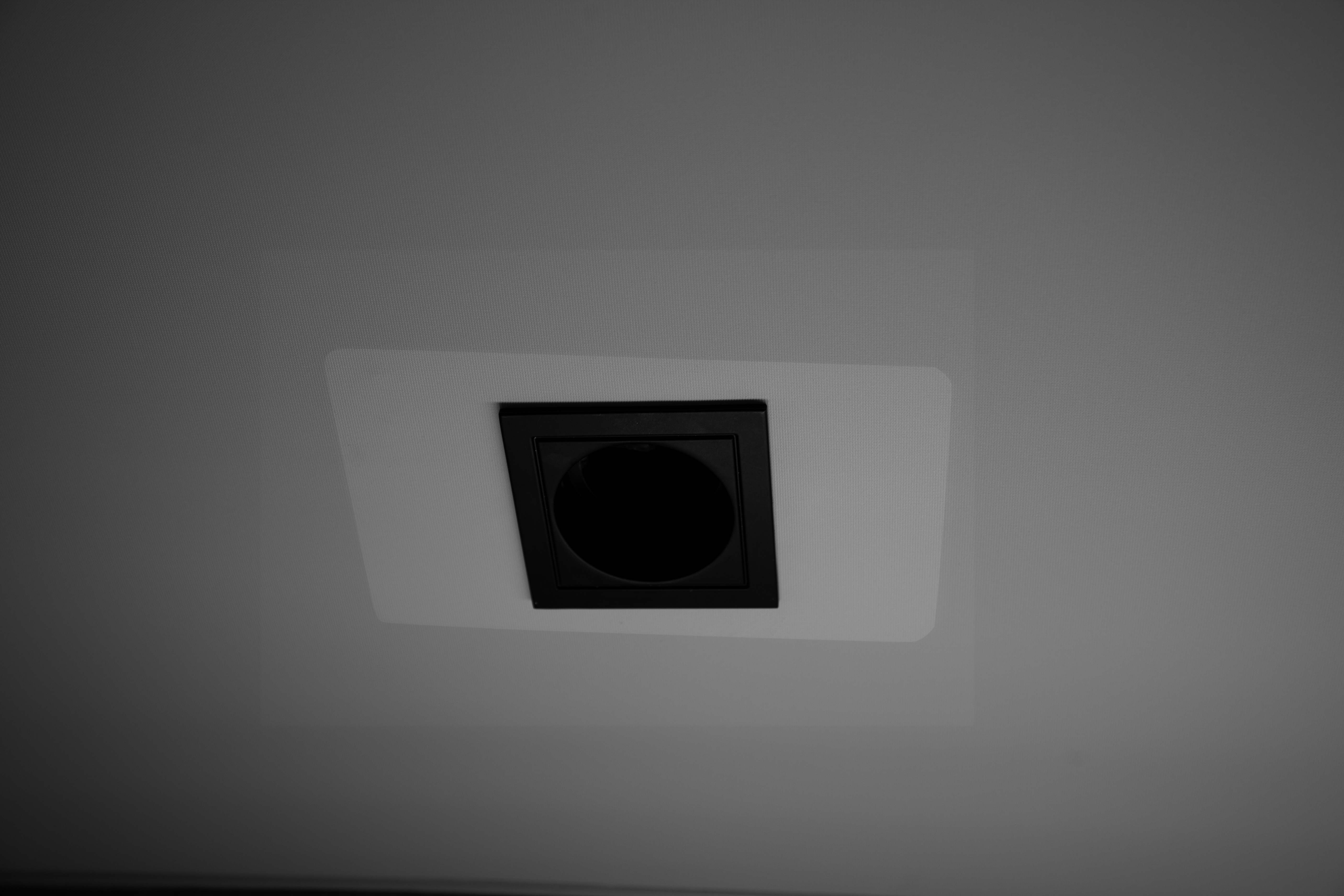
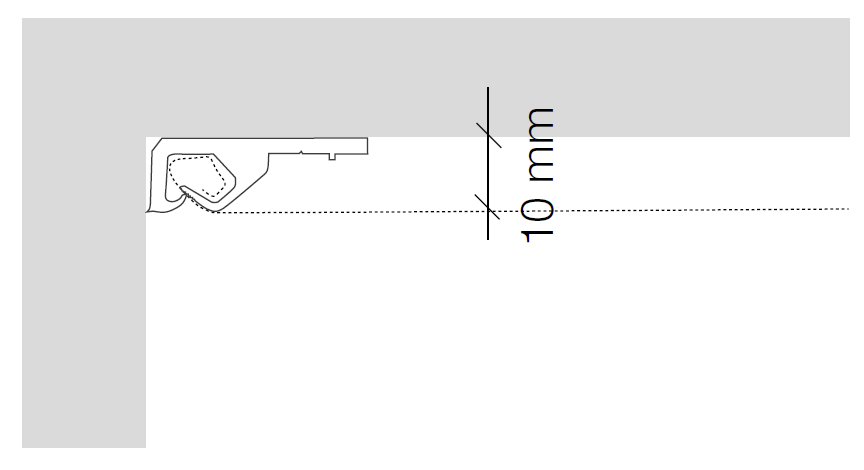
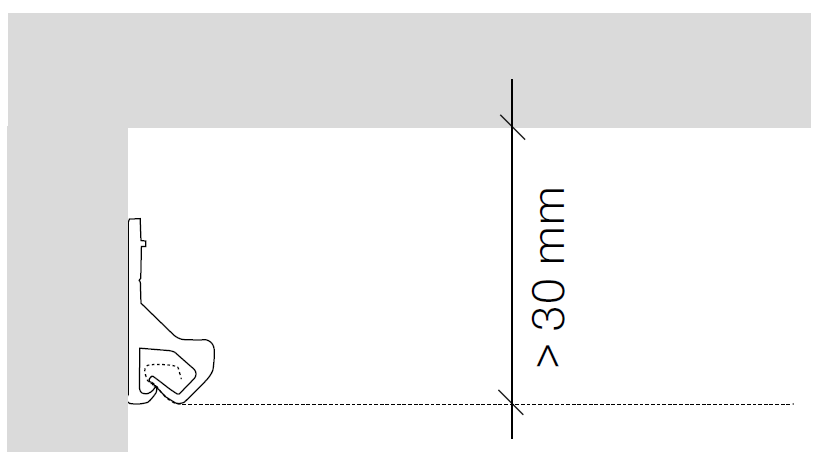
Quilting effect around technical ceiling elements
Stretch fabric is a soft, lightweight material. Once installed, it may show a very slight natural movement under its own weight. This is entirely normal.
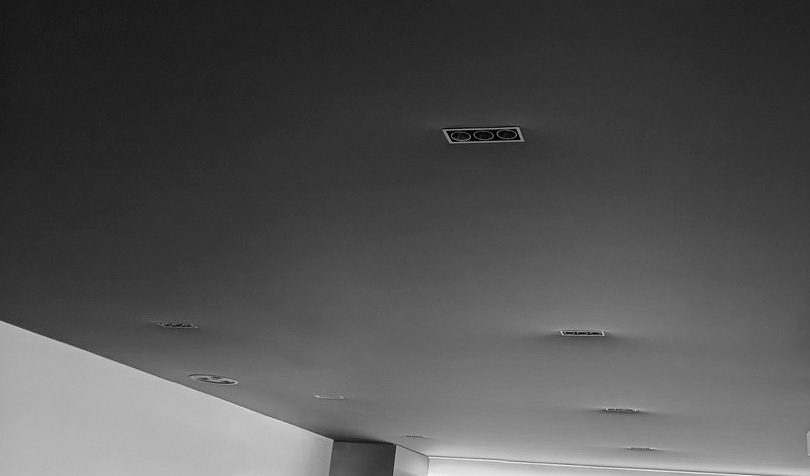
On large surfaces, this movement may be a little more visible. If technical elements are integrated (spotlights, ventilation grilles, hatches, sprinklers…), simply anticipate the final level of the fabric to keep a perfectly smooth finish around these elements. In the vast majority of cases, a simple adjustment to the support height is enough.
- Slight fabric movement is normal.
- It is easily anticipated during preparation.
- Well-positioned supports ensure a clean result.
Before fixing your supports, stretch a string between the profiles to visualise the final level of the fabric. This quick check lets you position your elements with confidence.
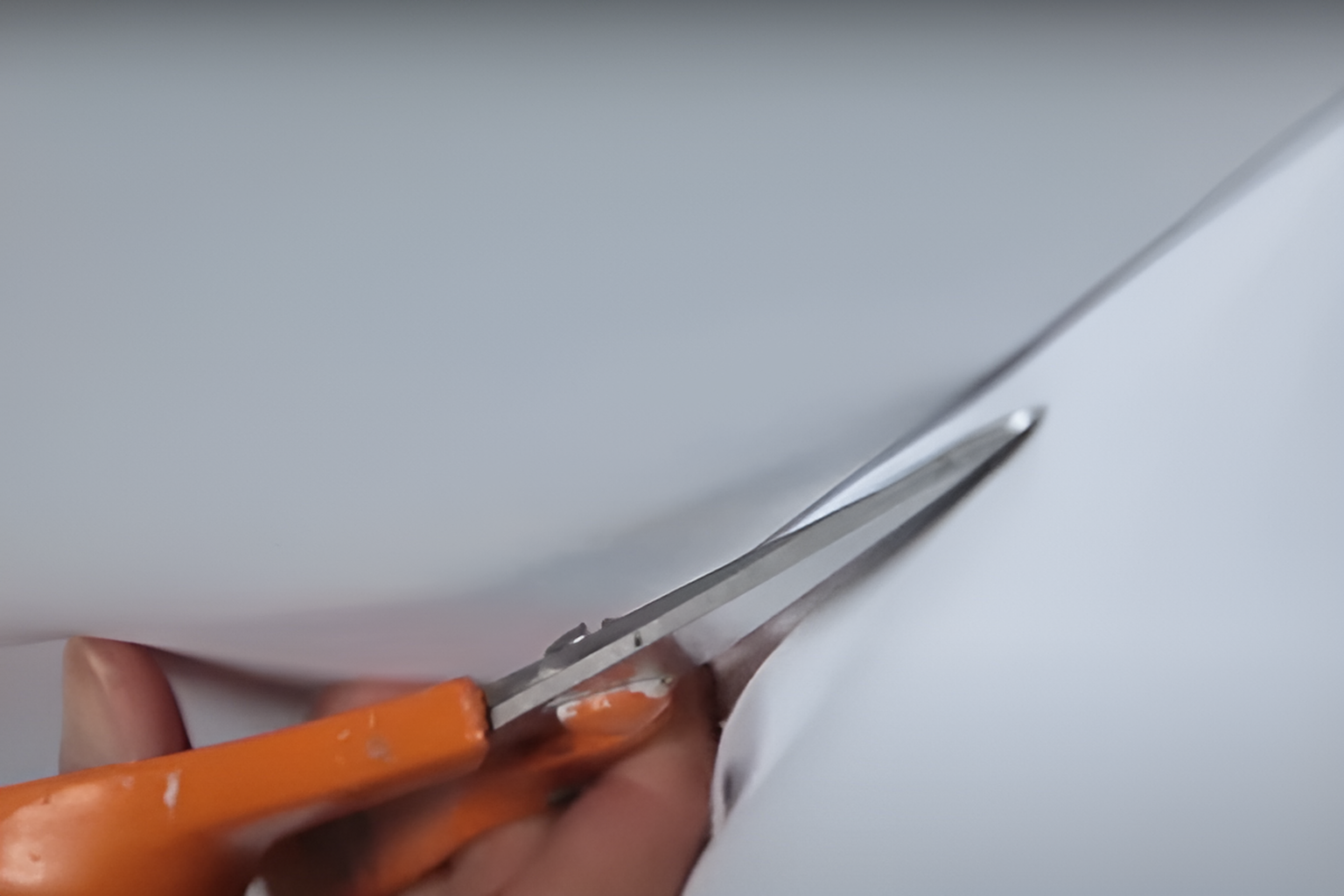
Cutting the fabric too short
During tensioning, small spatula adjustments may be needed to achieve a perfectly even surface. If the fabric is cut too early or too short, these final adjustments become more complicated. Fortunately, simply waiting for the right moment avoids this issue.
- Wait until the final tension is confirmed before cutting
- Don't rush when trimming
- Prefer scissors over a cutter
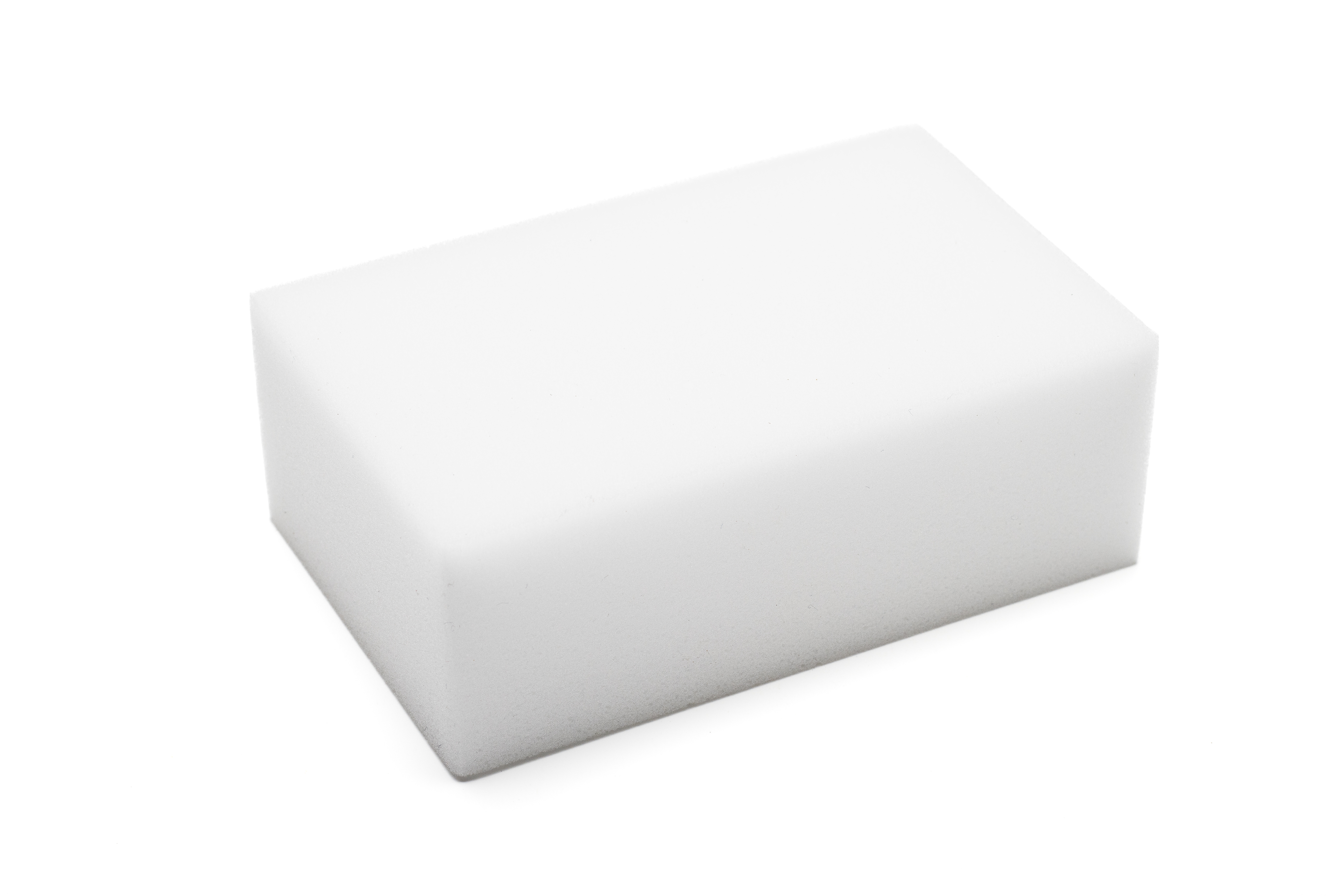
Cleaning the fabric with unsuitable products
Using unsuitable cleaning products, solvents, harsh detergents, or inappropriate accessories such as a yellow sponge can cause stains, marks, or irreversible damage to white fabric.
For effective, risk-free maintenance, we recommend using a white magic sponge.
- Non-recommended chemical products
- Abrasive or coloured sponges
- Excess water

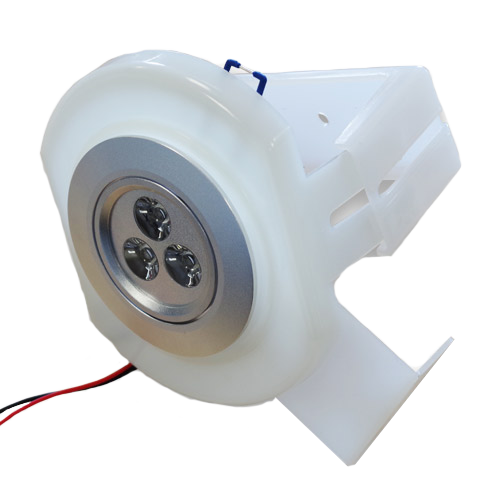
Building your own sub-structures
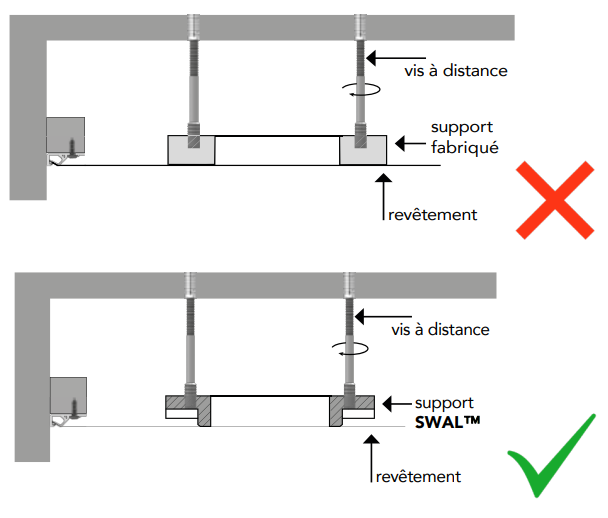
Supports for spotlights and technical elements play an important role in the final result. Poorly sized supports can create small visible marks around fittings. To make fitting easier, SWAL™ sub-structures are designed to naturally adapt to the height of SWAL™ coverings and to the normal movement of the fabric.
They make it easier to anticipate the final position of the fabric and secure a smooth finish, even for a first installation.
Damaging white fabric during handling
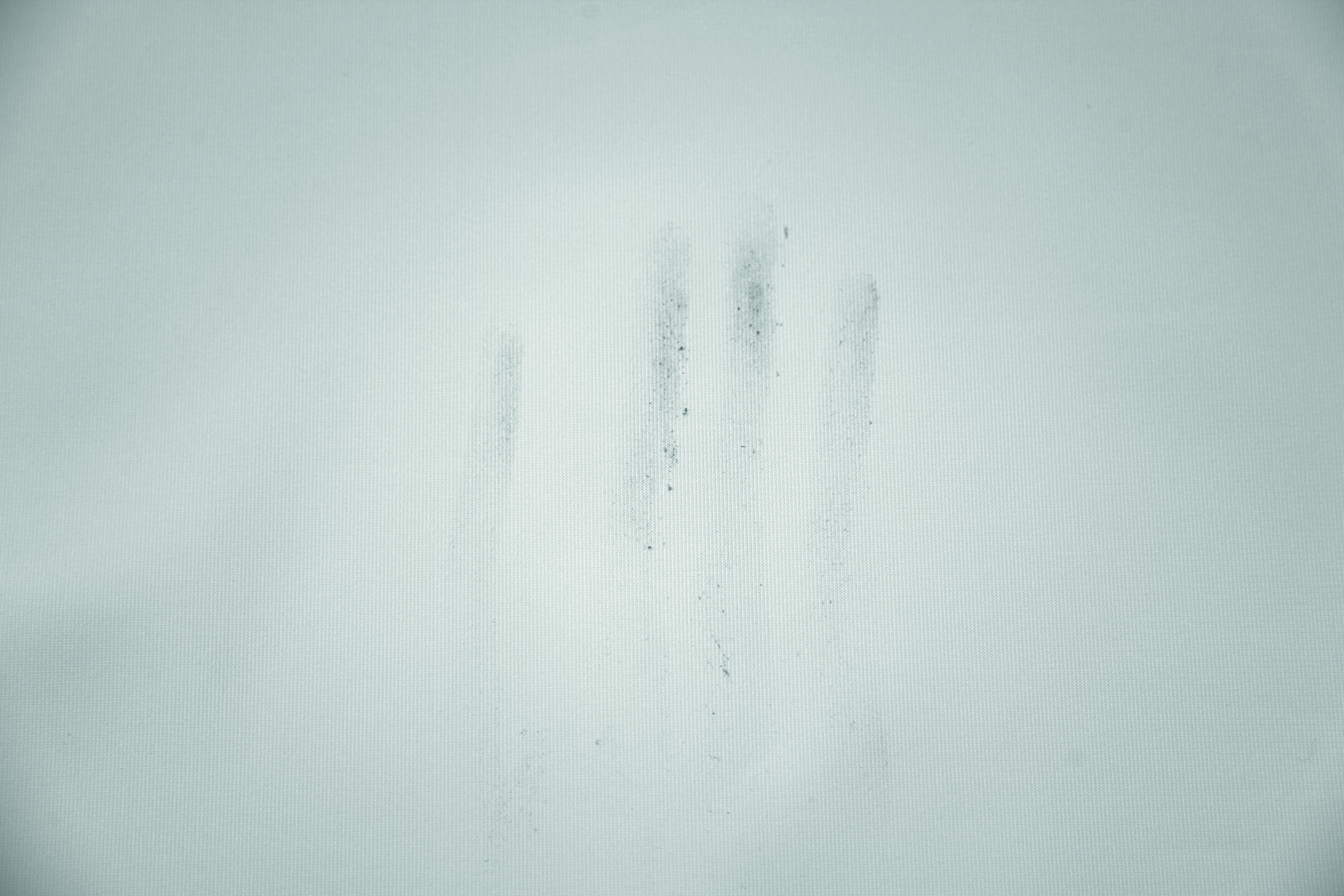
White fabric requires suitable handling and fitting conditions. Any inappropriate use, or work carried out on an uncontrolled site, can lead to marks that are not always possible to remove.
Particular attention must be paid to site cleanliness and to fabric handling throughout installation.
- Handling the fabric with dirty hands
- Contact with dirty, damp, abrasive or sharp surfaces
- Excessive dust on site during fitting
Our tips for a successful installation
Check the order contents
Always check the contents of the order as soon as you receive it, to make sure all the elements needed for fitting are present and correct, before starting any work. Make sure the fabric shows no defects and that the profiles match your order.
Follow our fitting tutorials
Follow our video tutorials and step-by-step guides, available directly on our website. These tutorials explain each step of the fitting process in detail, show the right techniques, and how to anticipate possible difficulties. Particularly useful for new installers or any project with complex technical elements.
Work methodically in a clean, organised environment
Work in a dry, clean and well-organised environment, with all the necessary tools and protective equipment. Preparing all elements in advance (sub-structures, technical elements, tools, floor protection) guarantees a smooth process and an optimal final result.
If in doubt, or for any further information, don't hesitate to call our technical department for advice specific to your project.